

Tools for Brokers: Starter Stack (2026)
Day-one tools for brokers: MT5 white label, CRM, liquidity bridge, PSP and KYC so you can open safely.
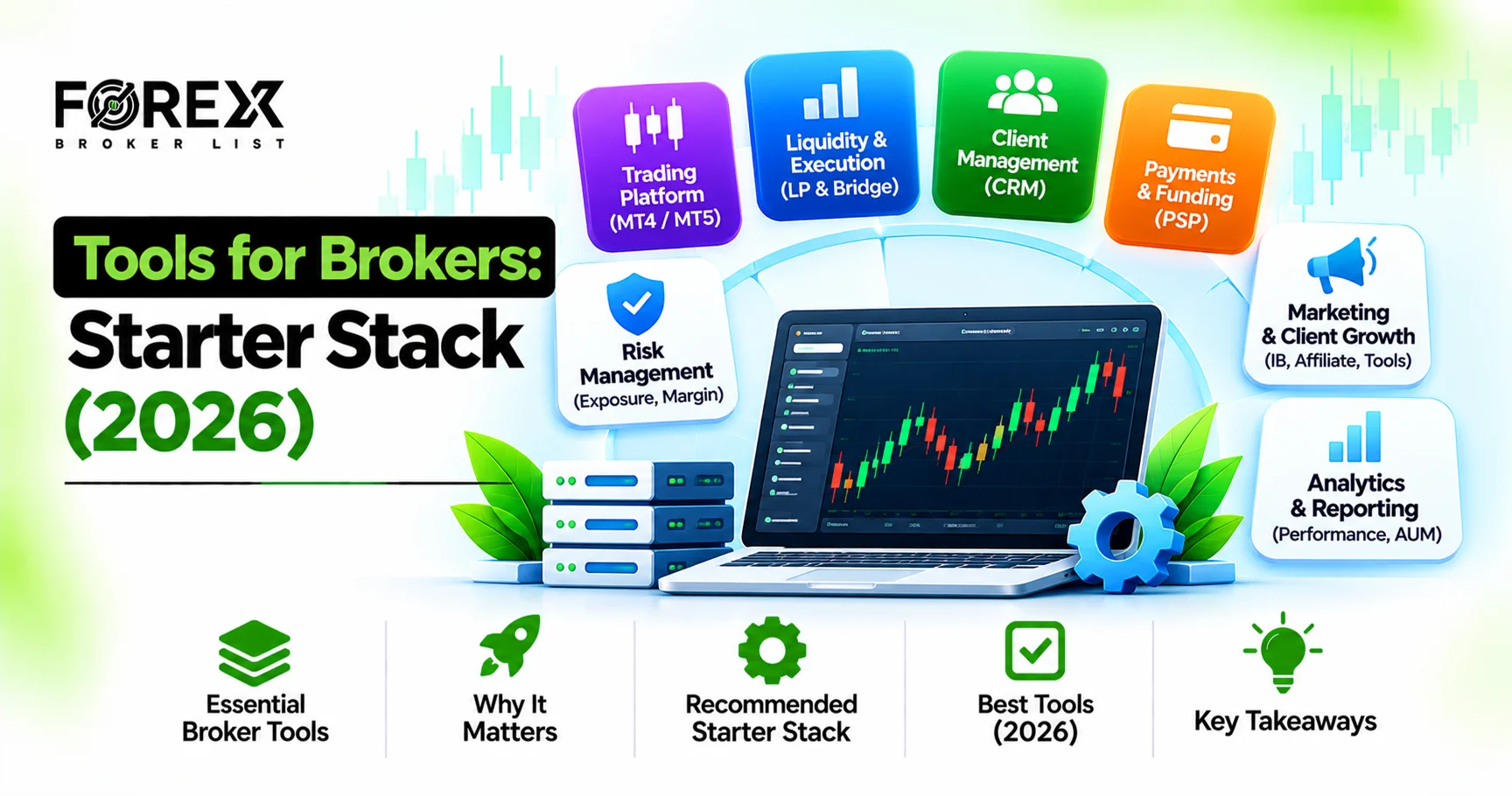
Tools for brokers form the minimum technology stack that lets a new forex brokerage open accounts, take deposits, route orders, and meet basic regulatory client-money rules from day one. The starter set normally covers an MT5 white-label platform, a CRM with trader room, a liquidity bridge to one or more providers, a payment service provider (PSP), automated KYC/AML screening, and basic risk controls. Most new firms launch on a white-label or grey-label package rather than building each layer themselves.
A new brokerage cannot open for business with only a website and a MetaTrader logo. Traders expect to register, verify identity, deposit, and place an order within minutes. Regulators expect client money to sit in segregated accounts and to be reconcilable at any time. The tools that deliver both outcomes are the starter stack.
What a Starter Stack Actually Contains
The starter stack is the smallest set of connected systems that can safely onboard a client and process a trade. It is not the full enterprise stack used by large multi-entity groups.
Core pieces on day one:
- Trading platform (most often MT5 white label)
- CRM and client portal (trader room)
- Liquidity connection and bridge
- Payment rails (PSP)
- KYC/AML verification tools
- Basic risk and exposure monitoring
Everything else (copy trading, PAMM, advanced analytics, multi-platform support) can wait until volume justifies the extra cost and integration work.
Trading Platform: Start with MT5 White Label
MT5 remains the default client-facing platform for new retail brokers. MetaQuotes stopped issuing fresh white-label licences in late 2022, so new firms obtain access through an existing licence holder. That arrangement is commonly called white label or sub-licence.
Typical published ranges in 2026 (from vendor planning guides, not fixed quotes):
- Setup: $5,000 to $15,000 (sometimes up to $20,000–25,000 for heavier configuration)
- Monthly platform fee: $1,500 to $5,000 (or higher once account volume rises)
B2Broker’s April 2026 guide placed a full package that includes platform, CRM and trader room in the $15,000–$50,000 setup band. Track360 planning figures cited in other 2026 round-ups put white-label setup at $5,000–$20,000 and monthly platform fees at $2,000–$7,000. Real first-year totals frequently land between $40,000 and $90,000 once bridge, hosting, CRM and support are added. Always request a line-item quote.
Pepperstone and IC Markets both operate MT5 environments under their respective licences, but a new broker starts with a white-label provider rather than a direct MetaQuotes contract. See our overview of brokers offering MT5 for how established names run the platform.
CRM and Client Portal
The CRM is the operational core. It stores client records, drives the onboarding workflow, triggers KYC checks, records deposits and withdrawals, calculates IB commissions, and feeds the trader room that clients actually log into.
Entry-level forex CRM subscriptions commonly start at $300–$2,000 per month. Setup and integration fees typically add $1,000–$5,000 once MT5 connectivity, basic PSP hooks and document workflows are included. Larger multi-jurisdiction or multi-tier IB structures push pricing higher.
Without a CRM the broker cannot maintain an audit trail of when a client was approved, when funds arrived, or which IB introduced the account. That trail is required under most regulatory client-money rules.
Liquidity Bridge and Providers
The trading platform does not speak the FIX protocol used by banks and prime-of-prime providers. A bridge (or gateway) translates prices and orders between the platform and the liquidity source.
Common bridge technologies include oneZero, PrimeXM, Centroid and Tools for Brokers. oneZero has stated that its technology processes more than $250 billion average daily volume and hundreds of millions of quotes (Source: oneZero public materials, 2026). Monthly bridge fees often fall in the $500–$5,000 range depending on the number of liquidity connections and volume.
New brokers usually begin with one reliable prime-of-prime rather than aggregating many sources on day one. Aggregation adds complexity and cost. Read our comparison of best liquidity providers for forex brokers and the explanation of what a forex bridge actually does.
Payments and PSP Layer
Card processors, e-wallets and open-banking rails are high-risk categories for most banks. A specialised payment service provider that already understands forex merchant models reduces rejection rates and handles multi-currency settlement.
Typical PSP integrations cover card, Skrill, Neteller, and local bank-transfer options. Monthly costs or per-transaction fees vary widely; the key operational requirement is automated reconciliation back into the CRM so that a deposit appears on the trading account within minutes and the client-money ledger stays accurate. Our guide on PSP versus traditional payment gateway covers the practical differences.
KYC and AML Tools
Automated identity verification is mandatory before a live account can be funded under most licences. Providers such as Sumsub, Onfido or Shufti Pro connect via API into the CRM workflow. The system checks documents, runs sanctions and PEP screening, and returns a pass/fail or manual-review status.
Manual document checks do not scale and create compliance gaps. Regulators expect the firm to demonstrate that every new client was screened. Budget for both the per-check fee and the integration work.
Risk Management and Client-Money Controls
Basic risk tools monitor net exposure, set automatic hedge thresholds, and alert when a single client or group of clients creates concentrated risk. Even a simple A-book / B-book routing decision needs to be logged.
Client-money segregation is non-negotiable under Tier-1 rules. The FCA Client Assets Sourcebook (CASS 7.13) requires firms to place client money promptly into accounts designated as client bank accounts at approved institutions, keep records that distinguish each client’s entitlement, and perform regular reconciliations (Source: FCA Handbook, CASS 7.13, as of 2026). Similar principles apply under ASIC and CySEC rules. The technology stack must support daily (or more frequent) reconciliation between the trading platform, the CRM ledger and the actual bank balances. Failure here has led to licence action in past cases.
Starter Stack Cost Comparison (2026 Planning Ranges)
| Component | Typical Setup (USD) | Typical Monthly (USD) | Notes |
|---|---|---|---|
| MT5 White Label | 5,000 – 15,000 | 1,500 – 5,000 | Sub-licence via provider; MetaQuotes no longer issues new WLs |
| CRM + Trader Room | 1,000 – 5,000 | 300 – 2,000 | Scales with IB tiers and jurisdictions |
| Liquidity Bridge | 1,000 – 5,000 | 500 – 5,000 | Depends on number of LPs and volume |
| KYC/AML Integration | 500 – 2,000 | Per-check fees | Sumsub-style API |
| PSP Connections | 1,000 – 3,000 | Transaction-based | Multiple rails recommended |
| Hosting / Monitoring | Included or 500+ | 500 – 2,500 | Provider-managed on white label |
Data sourced from B2Broker, Track360 and other vendor planning guides published in 2026, plus public MetaQuotes policy notes. Last updated: October 2026. These are ranges for budgeting only; obtain current quotes.
A realistic day-one package that covers the items above often totals $15,000–$40,000 in setup and $3,000–$10,000 per month once the firm is live. Grey-label options can sit lower but usually limit branding and control.
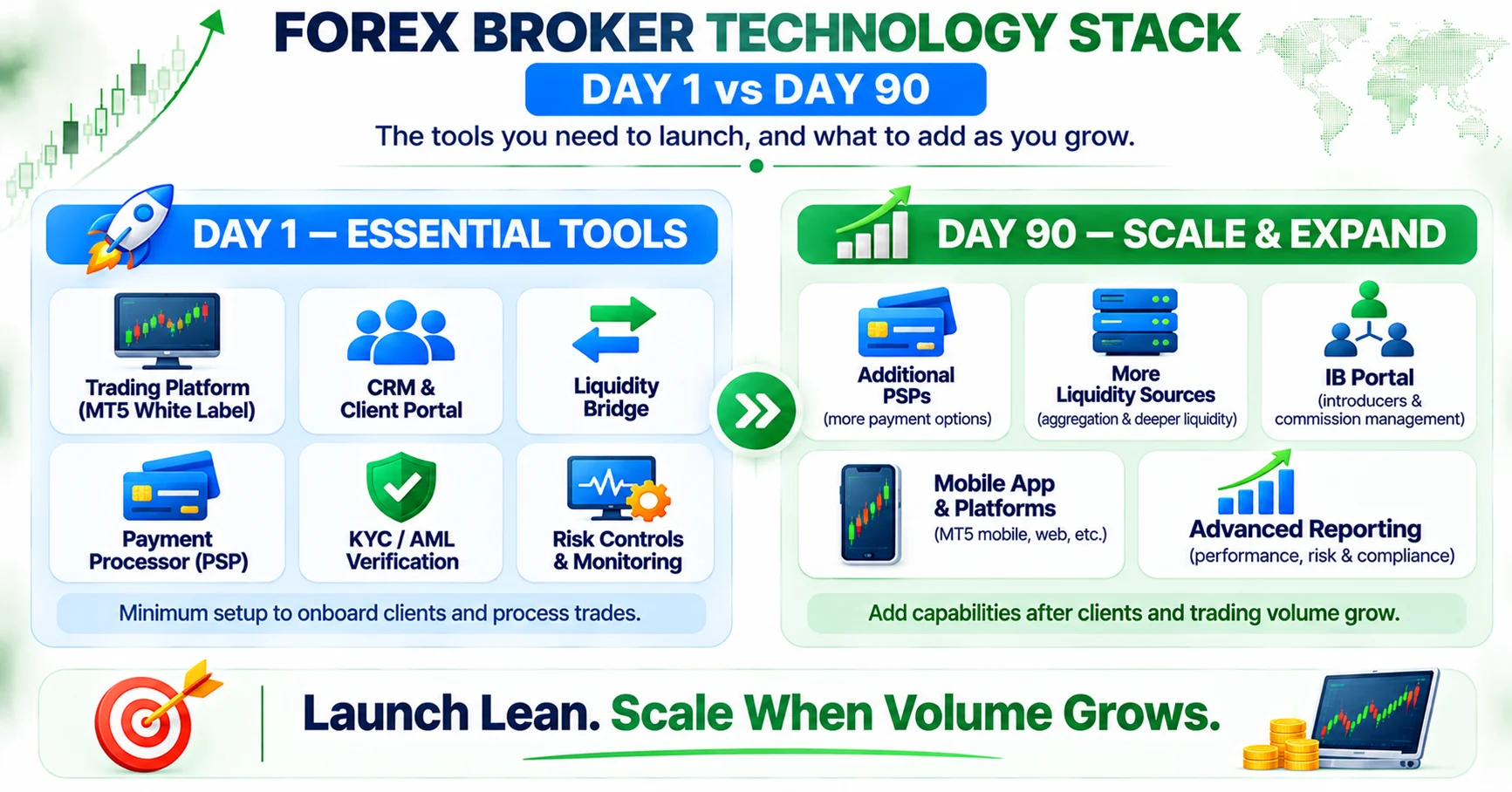
Day-1 Must-Haves versus Day-90 Additions
Day 1 (minimum to accept real clients):
- Live and demo MT5 environments
- CRM that creates accounts and logs KYC status
- At least one working deposit and withdrawal method
- Bridge to one liquidity source
- Client-money bank account structure and reconciliation process
- Basic risk alerts
Day 90 (after first clients and volume):
- Additional PSPs for higher conversion
- Second liquidity source or aggregation
- IB portal refinements
- Mobile app customisation or additional platforms (cTrader, TradeLocker)
- More detailed reporting and compliance dashboards
Adding every feature before launch delays go-live and increases integration risk. Several early-stage brokers have lost months and capital by trying to perfect the stack before taking a single deposit.
Common Mistakes When Assembling Tools for Brokers
Choosing the cheapest white-label package without checking the exact legal entity and licence that will hold client money. The platform brand is secondary to the regulatory wrapper.
Failing to test the full path: registration → KYC → deposit → trade → withdrawal → reconciliation. Gaps here produce support tickets and, in worse cases, regulatory findings.
Under-estimating monthly costs. Headline setup fees look attractive; bridge mark-ups, per-account charges and support tiers change the real number.
Ignoring audit trails. When a regulator asks for the history of a particular client’s funds, the CRM and platform logs must answer within hours, not days.
Past broker failures (including events around the 2015 Swiss franc move and later insolvencies) repeatedly showed that weak risk controls and poor client-money systems amplify losses for both the firm and its clients.
How to Choose and Verify the Stack
- Define the licence and entity first. The technology must support the client-money and reporting rules of that regulator.
- Request a full line-item quote and a test environment.
- Confirm which legal entity owns the MT5 server and the client-money accounts.
- Verify the liquidity provider’s own regulatory status on the official register (FCA, ASIC, CySEC or the offshore authority).
- Run a small live pilot with real (small) deposits before marketing begins.
- Document every integration and keep the reconciliation process written down.
Tier-1 regulated brokers maintain these controls as a condition of their licence. Review our page on tier-1 regulated brokers for examples of the standards that apply.
Conclusion
The starter stack for a new forex broker is deliberately limited: MT5 white label, CRM with trader room, liquidity bridge, PSP, KYC tools, and basic risk plus client-money reconciliation. These tools for brokers let the firm open accounts safely and meet the minimum expectations of both traders and regulators. Expanding the stack later is easier than fixing a broken foundation after clients are already trading. Obtain current quotes, test the full client journey, and confirm every regulatory detail on the official registers before the first deposit arrives.
This article is for informational and educational purposes only. It does not constitute financial or investment advice. Forex and CFD trading involves significant risk of loss and is not suitable for all investors. Always verify a broker's regulatory status through official authorities such as FCA, ASIC, or CySEC before depositing funds.
Frequently Asked Questions
Dipak Dangodra | Financial Writer at Forex Broker List
I am Dipak Dangodra, a financial writer at Forex Broker List. I have published 200+ articles on forex broker reviews, trading platforms, spreads and commissions, and regulatory analysis using data from FCA, ASIC, and CySEC.
Related Blogs
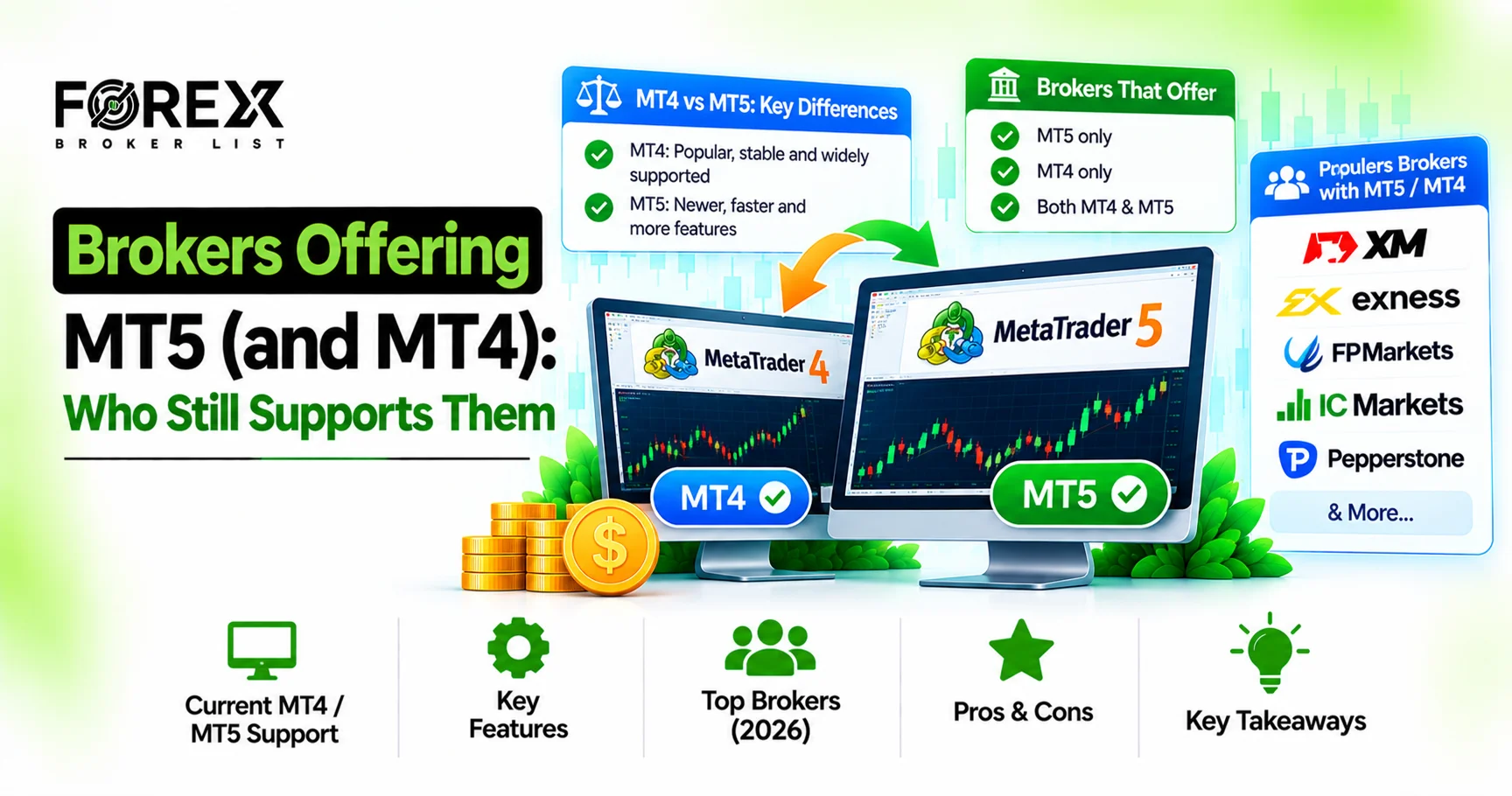
Brokers Offering MT5 (and MT4): Who Still Supports Them

 Your brand here