

How to Check If a Forex Broker Is Legit (2026 Guide)
10-point checklist to verify any forex broker is legitimate before you deposit.

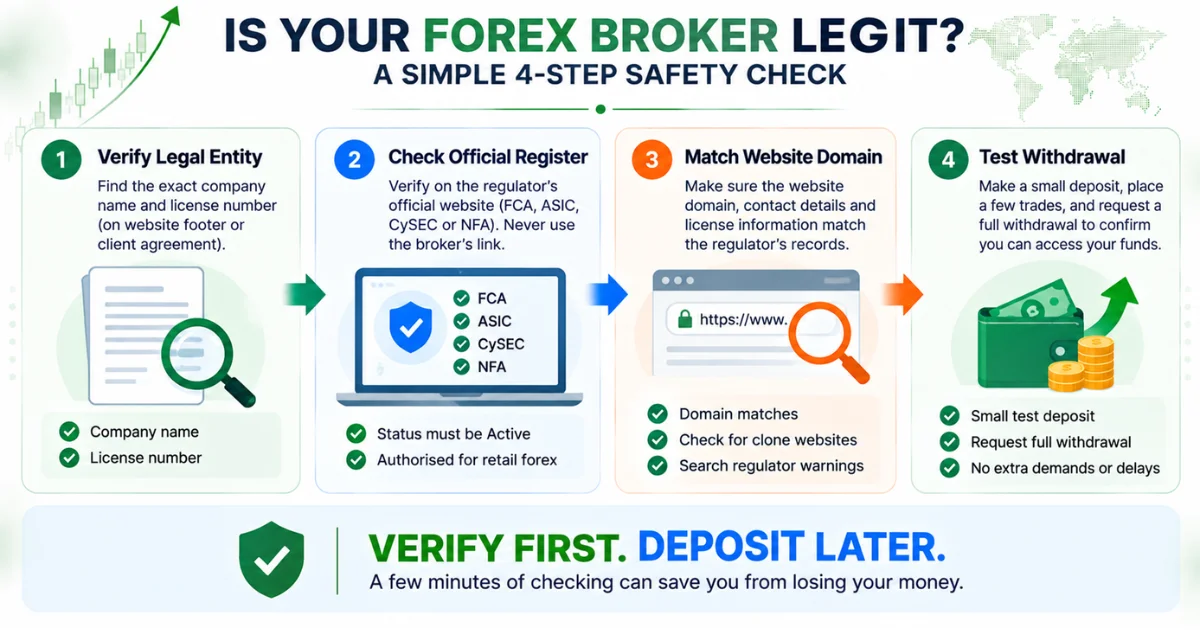
To check if a forex broker is legit, find the exact legal entity name and license number in the footer or client agreement, then verify both on the regulator’s official register (FCA, ASIC, CySEC or NFA). Confirm the status is active, the website domain matches, and the firm is authorised for retail forex. Always run a small withdrawal test before depositing large amounts.
Traders lose money every year because they trust a polished website and a regulation badge. The single most effective protection is a structured verification process that takes under 15 minutes. This guide gives you a clear 10-point scam check used by experienced traders before any deposit. Start by reviewing the full list of verified brokers so you already know which firms pass basic filters.
Why Most Traders Get Scammed (Even When the Broker Looks Regulated)
A regulation logo on a website is not proof of regulation. Scammers copy logos, invent license numbers, and create clone sites that look almost identical to real brokers. Many legitimate brands also operate multiple legal entities. The brand you see in advertising may be regulated in one country while the entity that opens your account sits under a lighter offshore licence.
The result is simple. Traders deposit with a firm they believe is FCA or ASIC regulated, only to discover later that their account sits under a different company with weaker rules. The 10-point check below stops this problem at the source. You can also filter by Tier-1 regulated brokers for higher protection standards.
The Complete 10-Point Forex Broker Scam Check
Follow these steps in order. Any single failure is a reason to walk away.
1. Find the exact legal entity name (not the brand)
Open the website footer, About Us page, or client agreement. Look for the full company name that includes Ltd, Pty Ltd, or Inc. Write it down exactly. Do not use the trading name shown in the header.
2. Note every claimed regulator and license number
Record every regulator the broker mentions and the matching license or firm reference number. A single brand often lists two or three entities. You need the one that will open your account.
3. Verify on the official register (never the broker’s link)
Type the regulator’s official website address yourself. Search the exact legal entity name or license number. Never click a link supplied by the broker.
4. Confirm status is “Authorised” or “Active”
The register must show the firm as currently authorised or licensed. Suspended, withdrawn, or cancelled status means stop.
5. Match the website domain and contact details
Compare the domain listed on the register with the site you are using. Check phone numbers and email domains. Mismatches often signal a clone firm.
6. Check regulator warning and clone lists
Search the FCA Warning List, ASIC Moneysmart warnings, and CySEC announcements for the broker name and domain. One confirmed warning is enough to reject the firm.
7. Check domain registration age
Use a free WHOIS lookup. A broker claiming years of experience on a domain registered only months earlier is a strong red flag.
8. Look for segregated client funds language
Legitimate regulated brokers state that client money is held in segregated accounts separate from the firm’s own funds. Vague or missing language is a problem.
9. Test a small deposit and full withdrawal
Deposit a small amount, place a few trades, then request a full withdrawal. A legitimate broker processes the withdrawal without extra demands or long delays. Problems here usually appear only after larger deposits.
10. Cross-check independent reviews for patterns
Look for repeated complaints about blocked withdrawals, sudden account freezes, or pressure to deposit more. One or two negative reviews mean little. Patterns across multiple platforms mean risk.
Official Regulator Registers You Must Use (2026)
Use only the official registers. Certificate images and broker-supplied links can be faked.
| Regulator | Official Register | Status You Must See | Key Items to Match |
|---|---|---|---|
| FCA (UK) | register.fca.org.uk | Authorised | Firm name, FRN, website domain, permissions for CFDs/forex |
| ASIC (Australia) | connectonline.asic.gov.au | Active AFS Licence | Exact company name, AFSL number, authorised activities |
| CySEC (Cyprus) | cysec.gov.cy (Regulated Entities) | Authorised CIF | Legal name, CIF licence number, website |
| NFA / CFTC (US) | nfa.futures.org/basicnet | Registered RFED / FCM | NFA ID, registration status, contact details |
Data sourced from FCA, ASIC, CySEC and NFA official registers. Last updated: October 2026.
You can also browse FCA regulated brokers, ASIC regulated brokers and CySEC regulated brokers for pre-filtered lists.
Red Flags That Mean Walk Away Immediately
-
No license number or legal entity name anywhere on the site
-
License number exists but belongs to a different company
-
Domain on the register does not match the site you are using
-
Broker appears on any official warning or clone list
-
Pressure to deposit quickly or promises of guaranteed returns
-
Withdrawal requests trigger new “verification” fees or long delays
Real Examples – Multi-Entity Brokers and What to Watch For
Many established brands operate under more than one legal entity. A trader who signs up through a marketing site may be onboarded under an offshore subsidiary even though the brand advertises Tier-1 regulation. Always confirm the exact entity named in the client agreement against the register. This single step prevents the most common form of regulatory mismatch.
Well-known multi-entity firms such as Pepperstone, IC Markets and AvaTrade operate under different licences depending on the client’s country. Always verify the specific entity that will hold your account.
What to Do If Your Broker Fails Any Check
Do not deposit. If you have already deposited, request a full withdrawal immediately and document every communication. Report the firm to the relevant regulator and to your country’s financial consumer protection body. Keep screenshots of the website, the license claims, and all correspondence.
Choosing a broker that passes these checks is only the first step. After verification, compare spreads, platforms, and account conditions using the full broker directory. For more educational guides, visit the ForexBrokerList blog.
Conclusion
A legitimate forex broker will survive every point on this checklist without excuses. The process takes minutes and protects capital that would otherwise be lost to clone firms and unregulated operators. Start with the legal entity name, verify it yourself on the official register, and never skip the small withdrawal test. Traders who follow these ten steps consistently avoid the majority of known scams.
This article is for informational and educational purposes only. It does not constitute financial or investment advice. Forex and CFD trading involves significant risk of loss and is not suitable for all investors. Always verify a broker's regulatory status through official authorities such as FCA, ASIC, or CySEC before depositing funds.
Frequently Asked Questions
Dipak Dangodra | Financial Writer at Forex Broker List
I am Dipak Dangodra, a financial writer at Forex Broker List. I have published 200+ articles on forex broker reviews, trading platforms, spreads and commissions, and regulatory analysis using data from FCA, ASIC, and CySEC.
Related Blogs

Best Liquidity Providers for Forex Brokers (2026 Comparison)

 Your brand here